Overview
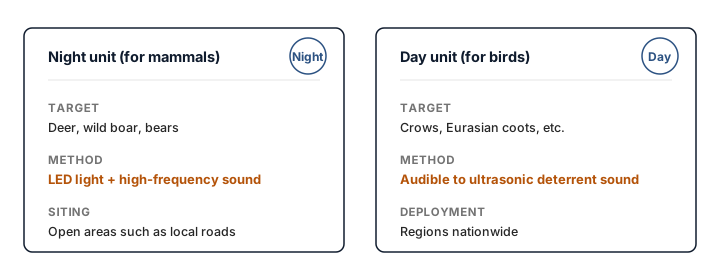
A non-lethal wildlife deterrent system that drives away birds and animals using light and sound, with no trapping or killing involved. Separate devices are deployed according to target species and time of day: nocturnal mammals (deer, wild boar, bear) are deterred by LED light combined with high-frequency sound, while diurnal birds (crows, coots, etc.) are repelled by deterrent sounds spanning the audible-to-ultrasonic range. The system draws on electronic control technology developed for automotive driver-assist functions and sensor control. It can also be installed at open access points — such as municipal and town roads where fencing or gates cannot be erected — where physical barriers are impractical.
Technical Features
- Non-lethal deterrence approach: Suppresses wildlife behavior through light and sound alone, with no trapping or killing — a low-environmental-impact solution to crop and property damage.
- Nocturnal unit (for mammals): Deters deer, wild boar, and bear using a combined stimulus of LED light and high-frequency sound. Serves as an alternative to fencing and gates at open sections such as municipal and town roads.
- Diurnal unit (for birds): Addresses crows, coots, and other bird species with deterrent sounds across the audible-to-ultrasonic range. Operational across multiple regions throughout Japan.
- Automotive technology applied: Electronic control expertise cultivated through in-vehicle driver-assist functions and sensor control has been adapted for use in the deterrent devices.
- Patented deterrence method: The combined light-and-sound deterrence approach is covered by a registered patent.
Integration with Drone Surveys
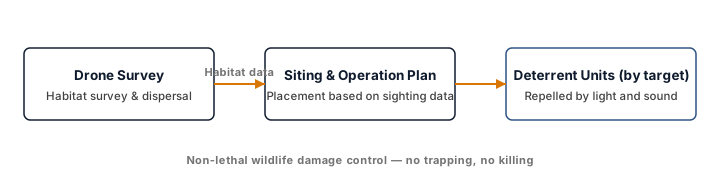
- Drone operations cover habitat surveys, active dispersal, and suppression of wildlife incursions.
- Aircraft used: Mavic 2 Enterprise Advanced and Matrice 30T.
- All missions are handled by nationally licensed drone pilots who also hold hunting licenses.
- Survey findings on wildlife activity patterns are used to plan the placement and operation of deterrent devices.
Intended Applications
- Reducing crop damage from deer, wild boar, and bear on farmland and in orchards.
- Preventing mammals from entering open-access areas — such as municipal and town roads — where fences or gates cannot be installed.
- Deterring birds (crows, coots, etc.) around agricultural ponds, paddy fields, and other waterside environments.
- Non-lethal wildlife management in situations where trapping and culling are not desirable.
Key Specifications & Features
- Target-specific devices: Nocturnal unit (mammals — LED light + high-frequency sound) / Diurnal unit (birds — audible to ultrasonic)
- Method: Non-lethal light-and-sound deterrence (patented)
- Technology base: Adapted from automotive driver-assist and sensor control technology
- Survey integration: Drone-based habitat surveys, active dispersal, and incursion suppression
- Installation: Suitable for open-access areas where fencing or gates cannot be erected
Monozukuri Finder can connect you with Japanese manufacturers capable of delivering this technology. Inquiries regarding detailed specifications or international deployment are welcome.